
The Northeast is changing fast. Tourists are pouring into Shillong, Tawang, Ziro, and Tura. Cafés are cropping up on misty hillsides. Food entrepreneurs from across India are eyeing these markets with excitement — and rightly so.
But here’s the truth most people discover only after they’ve already invested: opening a restaurant in Meghalaya or Arunachal Pradesh is not like opening one anywhere else in India. The rules are different. The supply chains are different. The customers are different.
This guide exists so you don’t learn those lessons the hard way.
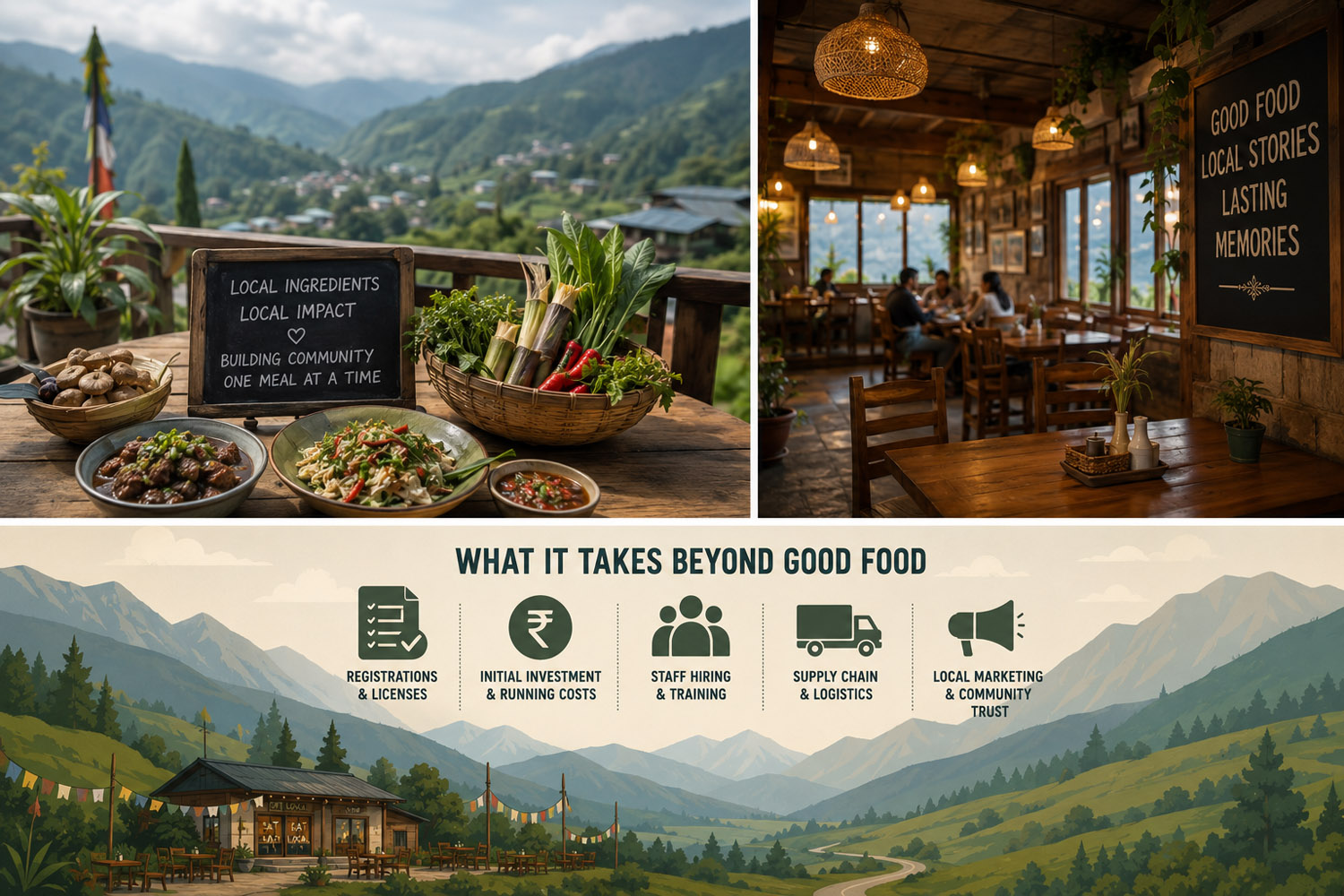
1. Understand the Market Before You Plan the Menu
Both states run on tourism cycles, not steady urban demand. Meghalaya peaks around October–March (Living Root Bridges, waterfalls, Shillong’s music scene). Arunachal Pradesh surges from March–June and October–November (Ziro Festival, cherry blossom season, Tawang monastery tourism).
What this means for you: Your revenue will have high seasons and very slow months. Build your financial model around this reality from Day 1. A cash flow buffer of at least 3–4 months of fixed costs is not optional — it’s survival.
Pro Tip: Local customers (residents, college students, office-goers) are your anchor. Tourists are your bonus. Design your menu and pricing to serve both.
2. The Supply Chain Will Be Your Biggest Headache
This is the part no one tells you upfront.
In Guwahati or Kolkata, you can call a vendor and get fresh produce the next morning. In Itanagar, Bomdila, or Tura, that same call might mean a 2–3 day wait — or no delivery at all during monsoons when roads get cut off.
Key challenges to plan for:
- Most packaged ingredients (oils, sauces, dairy) come from Guwahati or Siliguri and pricing is 20–40% higher
- Cold chain infrastructure is limited — perishable items need careful planning
- Monsoon season (June–September) regularly disrupts road connectivity, especially in Arunachal Pradesh
- Local sourcing of vegetables and meat is possible and often cheaper, but requires building vendor relationships on the ground
What smart operators do: They design menus around what’s locally and consistently available, and keep 15–20 days of dry stock as a buffer. Simplicity in your supply chain is a competitive advantage here.
3. Licensing Is More Complex Than You Think
Most entrepreneurs budget time for an FSSAI license and a trade license. In these states, there’s more to navigate.
In Arunachal Pradesh:
- The Inner Line Permit (ILP) system restricts non-locals from settling or doing business without proper documentation. If you’re not a local resident, you’ll need to partner with a local or fulfill specific residency/registration requirements.
- Liquor licensing is particularly nuanced — dry zones exist near certain protected and tribal areas.
In Meghalaya:
- The state operates under its own Meghalaya Liquor Prohibition Act framework. Liquor licensing is zone-specific and takes longer than most states.
- Shillong Municipal Board, district councils (for rural areas), and state-level food licensing bodies each have separate jurisdiction depending on where your outlet sits.
Our advice: Hire a local legal consultant before you sign a lease. Licensing delays have killed many otherwise well-planned launches.
4. Hire Local — And Invest in Training
Workforce availability is limited compared to Tier-1 cities. You won’t find a ready pool of trained kitchen staff or experienced floor managers in most towns in Arunachal or rural Meghalaya.
What works:
- Hire locally and train from scratch — the workforce is eager, loyal, and picks up skills quickly
- Partner with local hospitality institutes where they exist (Shillong has a few)
- Build SOPs (Standard Operating Procedures) from Day 1 so your operations don’t depend on one or two key people
- Factor training time into your pre-launch timeline — add at least 3–4 extra weeks
Staff turnover is lower here than in metros, which is a major advantage once you’ve invested in training.
5. Your Menu Is Your Strongest Marketing Tool
This is where most outsider-owned restaurants make their biggest mistake: they bring a generic menu and ignore what the land has to offer.
Both Meghalaya and Arunachal Pradesh have extraordinary local food cultures that are still largely unexplored commercially.
- Meghalaya: Jadoh (rice and pork), Dohkhlieh, Tungrymbai, Pumaloi — rich, earthy flavours that urban tourists actively seek
- Arunachal Pradesh: Thukpa, Pika Pila, Bamboo shoot preparations, smoked meats — increasingly popular with younger travellers
A menu that smartly blends local specialties with familiar comfort food outperforms both pure-local and pure-mainstream menus every time. It gives tourists something authentic and gives locals something familiar.
Think of your menu as a story about the place. That story is your marketing.
6. Digital Presence Matters More Than You’d Expect
Many entrepreneurs assume that in smaller towns, word-of-mouth is enough. It is — eventually. But in tourist-driven markets, your Google Maps listing and Instagram page are your storefront before anyone walks through your door.
Travellers research restaurants before they arrive. If you’re not on Google Maps with photos and reviews, you simply don’t exist for a large portion of your potential customers.
Quick checklist before you open:
- ✅ Google Business Profile set up and verified
- ✅ Instagram page active with location tagged in posts
- ✅ Listed on Zomato or Swiggy where available
- ✅ At least 10–15 photos of your food and space ready to post
The Bottom Line
Meghalaya and Arunachal Pradesh are genuinely exciting markets for food entrepreneurs. The competition is still low. The tourism growth is real. The appetite for quality dining experiences is growing fast.
But success here requires local knowledge, realistic planning, and operational discipline that generic restaurant advice simply doesn’t cover.
At Brand Clutch, we’ve worked on the ground across Northeast India — from launching the Bowling Alley Restaurant in Shillong in 20 days to advising F&B brands entering newer Northeast markets. We understand what it takes to succeed here, not just in theory, but in practice.
Thinking of opening a restaurant in Meghalaya or Arunachal Pradesh? Let’s have a conversation before you sign your first lease.
📞 +91-93951-57515
🌐 brandclutch.in
Brand Clutch is a Guwahati-based F&B consulting firm specialising in restaurant launches, franchise structuring, and operational excellence across Northeast India.